In The Beginning
The Birth of the Royal Ceylon Air Force
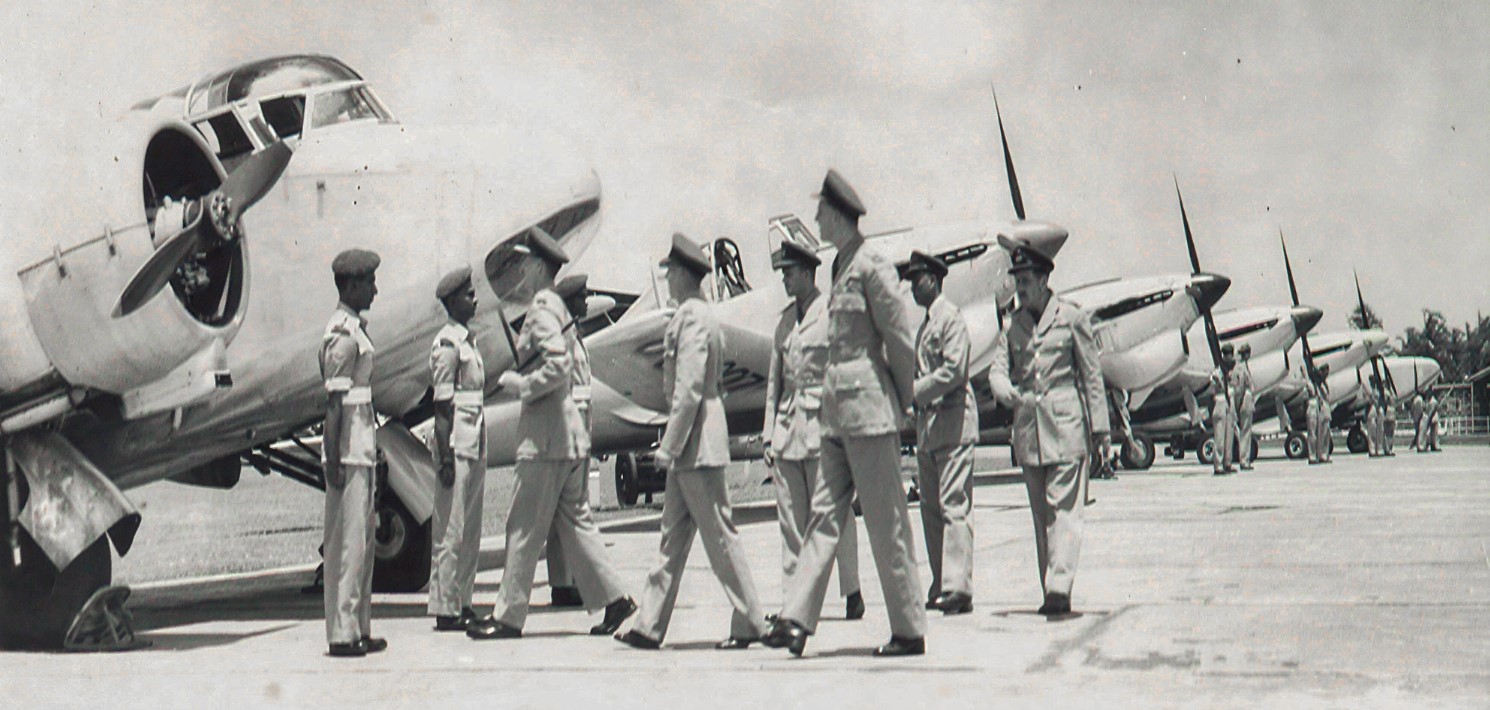
The Royal Ceylon Air Force was born on 2nd March 1951. The founding of the Royal Ceylon Air Force began with the presentation of 41 of 49; Bill No. 41 of 1949, which was presented to Ceylon's House of Representatives, by Mr R.G.Senanayake, Parliamentary Secretary to the Minister of Defence and External Affairs on 9th August 1949. The Bill was read in the House for the second time on 30th August 1949. The Bill provided for a Regular Air Force, a Regular Air Force Reserve, a Volunteer...
Men and Material
Officers, Cadets & Apprentices
Not having had the support of a volunteer force, or trained manpower amongst the Ceylonese, Group Captain Bladon had to rely on RAF personnel to fill his requirements of Senior Staff Officers. Among the first Ceylonese to be recruited as Officers were Sqn Ldr E. Rohan Amarasekera D.F.C. (Air Staff Officer), Flt Lt R.B.D. Jansen (Engineering Officer), Flt Lt Ken Nagarajah (Equipment Officer), Flt Lt Wijendran (Secretarial Officer), Flt Lt P.G. Walpita (Education Officer) and F/O S.N. Samarasinghe...
Early Management & Structure
Principal Staff Officers & Early Units
In the early days, Air Force Headquarters had four Principal Staff Officers who were assigned to carry out specific duties. They were the Senior Air Staff Officer (SASO) who was responsible for air matters, the Senior Technical Staff Officer (STSO) who was responsible for all technical matters, the Senior Officer-in-Charge of Administration (SOA) who was responsible for administration, and the Senior Equipment Staff Officer (SESO) who was responsible for equipment and supplies The e...
Early Wings
Wings of the Fledgling Force
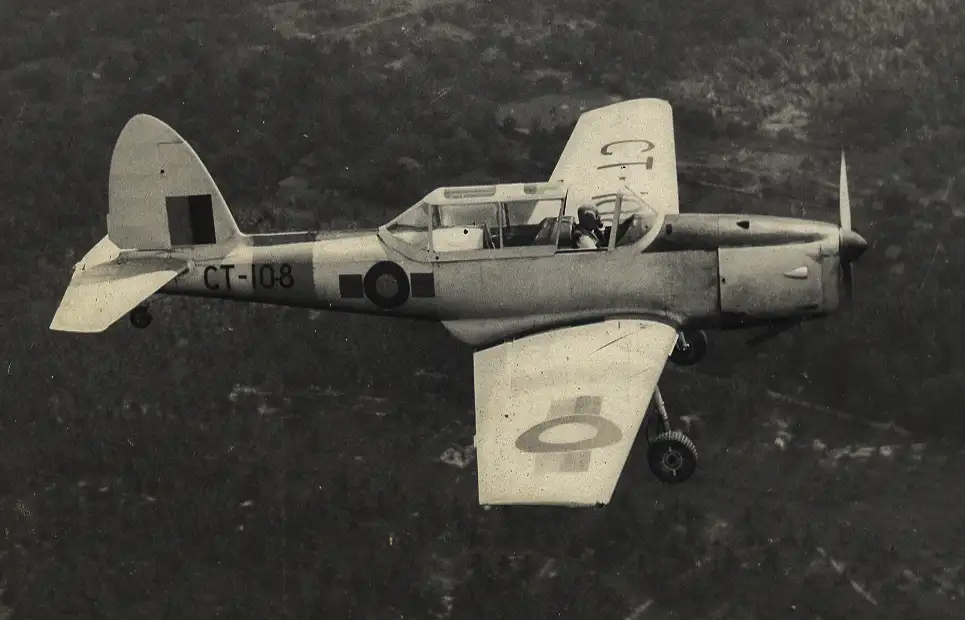
At inception, the RCyAF owned no aircraft. Early recruits had to make do with PT and Drill routines,until the first four Chipmunks arrived, and later the Oxfords and Balliols as well. The RCyAF's first trainer, the Chipmunk was ordered in 1950 and the first batch of four aircraft arrived in Ceylon in October the same year. With the arrival of the Chipmunk, aircraft engineering activities could begin.The aircraft were brought in and assembled at Katunayake, under the guidance of RAF Engineers and...
THE RAF AND RCYAF - A PARTING OF THE WAYS
RAF AND RCYAF
Thus did the control of the Katunayake Base pass from British hands to Ceylonese ones In similar fashion, the Government acquired control of the British Naval Base in Trincomalee. It is pertinent to record for posterity, the words of farewell from the Acting British High Commissioner on that historic day in Katunayake, and the reply made by the Honourable Prime Minister S.W.R.D. Bandaranaike Mr T.L. Crosthwaite said, Today, it is fitting to consider how air power has af...
THE BAKER YEARS
RAF AND RCYAF
By the time the RCyAF commenced the Barker Years (i.e. post 1958), No. 1 Squadron had been split into No. 1 Squadron, commanded by Flt Lt Vivekananthan and No. 2 Squadron commanded by Flt Lt Paddy Mendis. The split was effected on 01 September 1957. No 1 Squadron, which continued to handle flight-training duties, operated the Chipmunks and Balliols The newly formed operational No. 2 Squadron, which handled transport and patrol duties, flew the Oxford Airspeed, Prestwick Pioneer and ...
THE BAKER YEARS
Squadrons Take Shape
By the time the RCyAF commenced the Barker Years (i.e. post 1958), No. 1 Squadron had been split into No. 1 Squadron, commanded by Flt Lt Vivekananthan and No. 2 Squadron commanded by Flt Lt Paddy Mendis. The split was effected on 01 September 1957. No 1 Squadron, which continued to handle flight-training duties, operated the Chipmunks and Balliols The newly formed operational No. 2 Squadron, which handled transport and patrol duties, flew the Oxford Airspeed, Prestwick Pioneer and ...
THE FIRST JETS ARRIVE
Jets, Unrest & Assassination
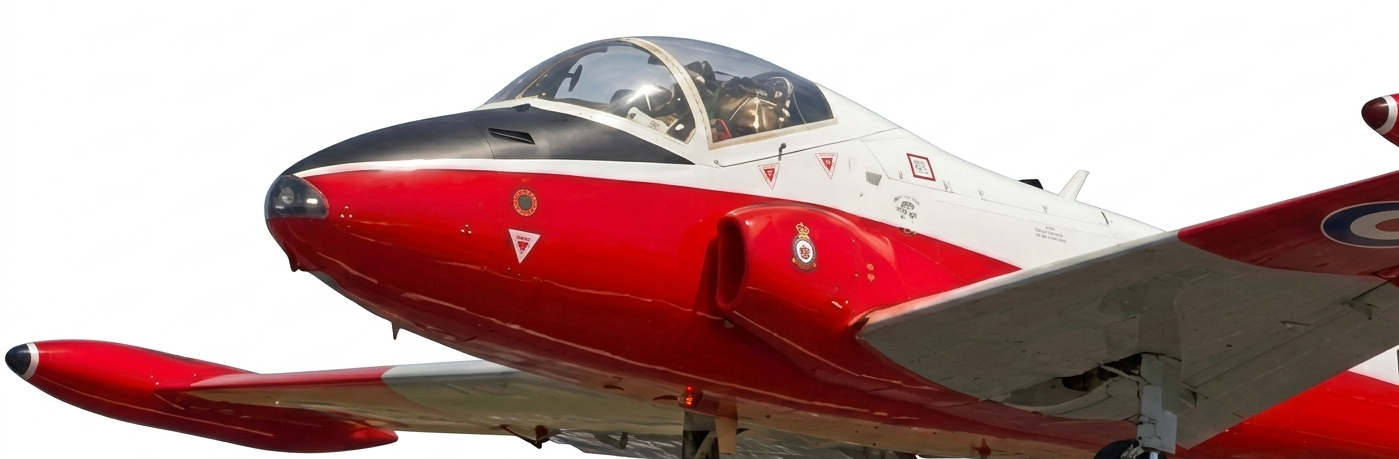
All things were considered, the RCyAF pilots coped well with their latest acquisition and first ever jetaircraft. Even though history does record one hiccup, there was no fault of the pilot. The RCyAF was practicing for the Independence Day Fly Past in 1960 the Jet Provosts were in flight formation when one of the aircraft experienced a flame out. The pilot, Sqn Ldr Noel H. Lokuge broke formation and ejected from the aircraft which later went down into the Negombo Lagoon. Sqn Ldr Lo...
SETTING THINGS UP
The Dawn of Insurgency
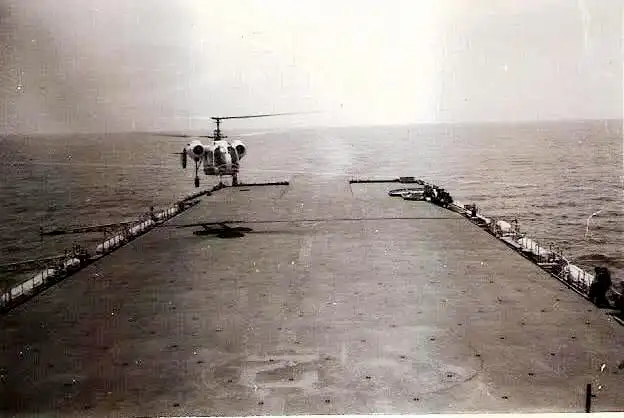
On 15th January 1971, the No. 1 RCyAF Trade Training School, Katunayake, came into being to provide formal training for Officers and Aircraftsmen in their branch or trade. The School also organized and conducted all trade testing and preparation of syllabi for all trades other than Signals, Electronics and Radar. This formation consisted of three main wings Planning and Control, Instructional and Examination. No. 4 Helicopter Squadron received independent Unit status from 15th January 1971, and ...
THE WINDS OF CHANGE
Restructuring for the Future
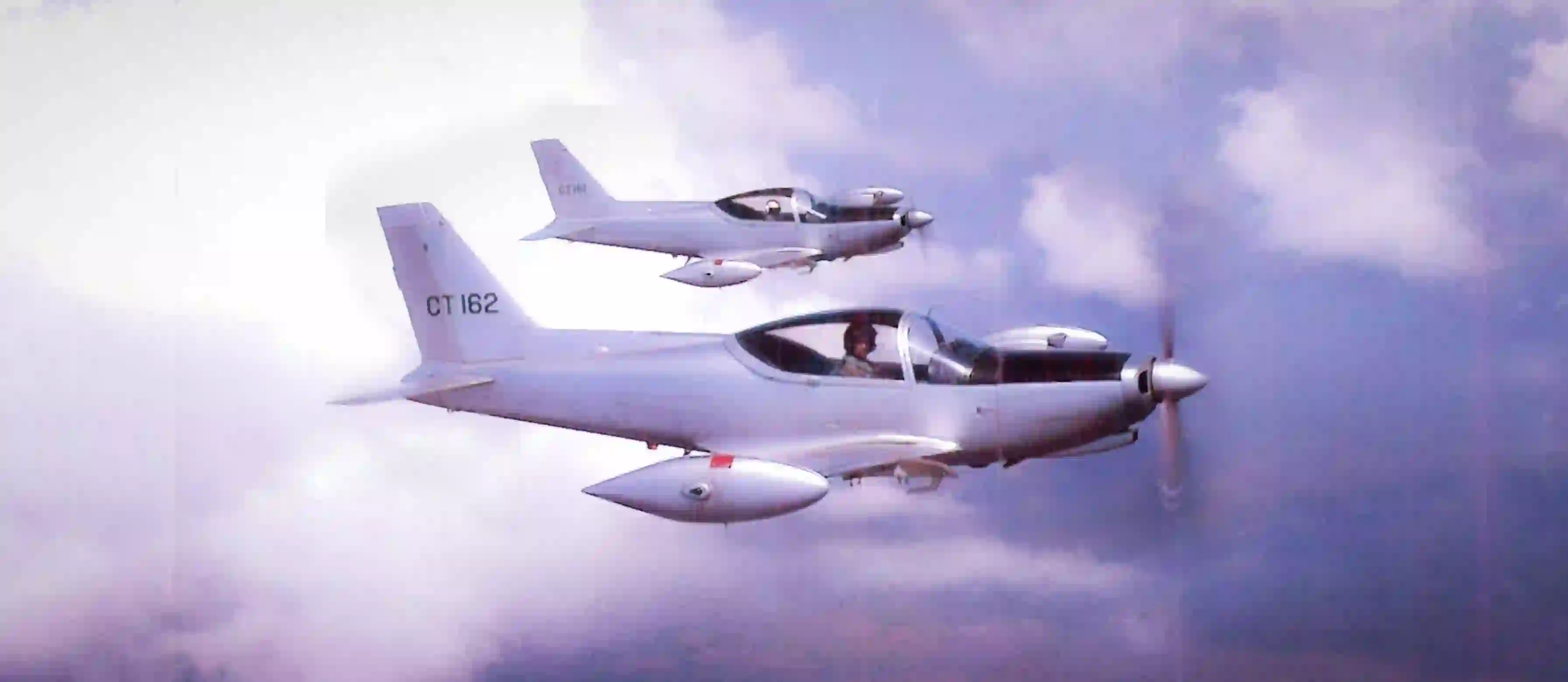
The next step was the setting up of a Board of Management, under the Chairmanship of the Commander. The Board comprised the Chief of Staff and Heads of Branches at Air Force Headquarters (the former Principal Staff Officers, who were designated as Directors) with the Director of Administration functioning as Secretary to the Board. The Board met fortnightly. In order to monitor the activities of independent formations, the Commander met the COs once in 3 months. The Directors in tho...
THE RILEY-HERON CONVERSION
Luxury in the Skies
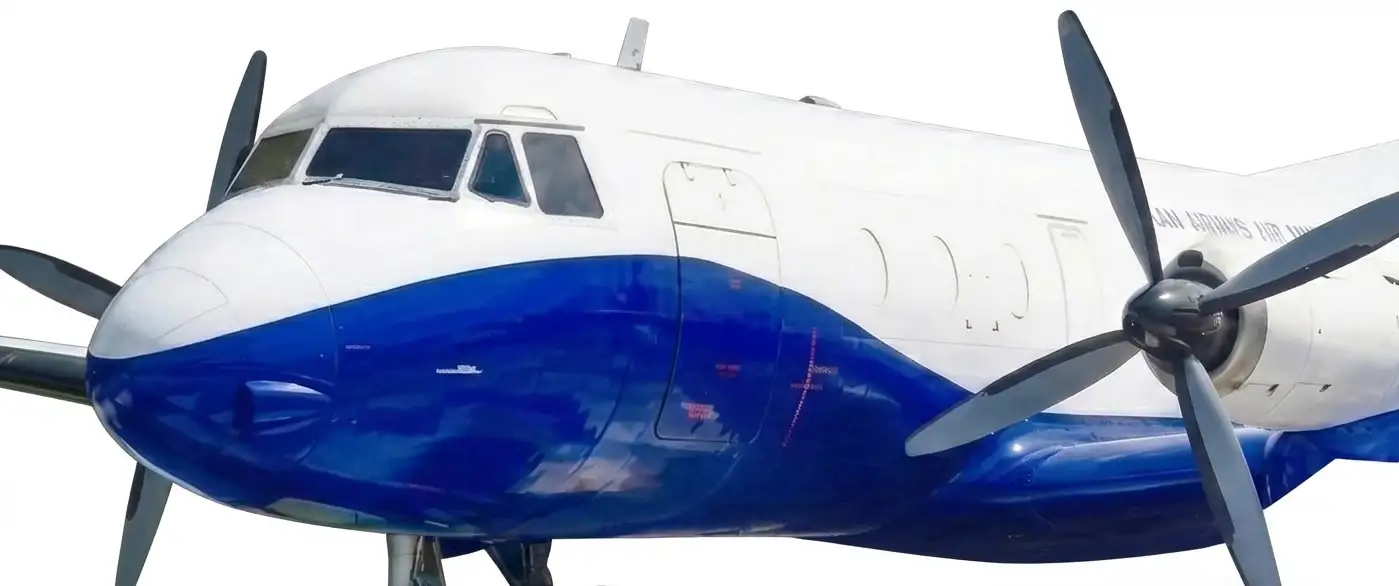
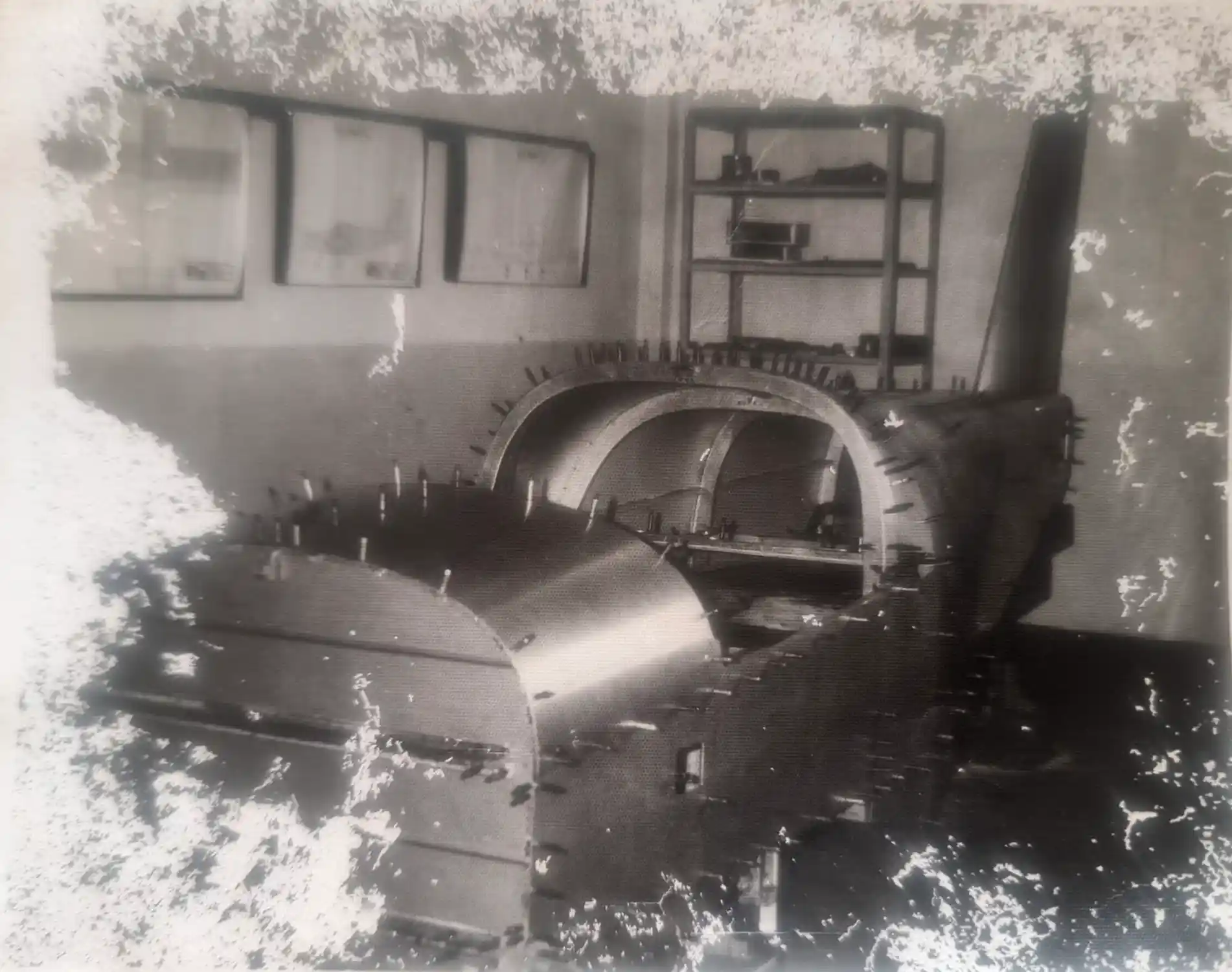
An important event was also recorded in 1972 in the field of aeronautical engineering. The Air Force had felt for some time, the need to enhance the flight endurance, speed and comfort of its De Havilland Heron MK11D aircraft. The task was entrusted to the Technical Maintenance Depot, Katunayake by Commander Mendis. The Technical Maintenance Depot was headed by Group Captain M. Herbert Marasinghe, who had as his deputy, Flight Lt N. (Jim) Gunaratnam. At this time a conversion had be...
A NEW COMMANDER TAKES OVER
Transition & Transformation
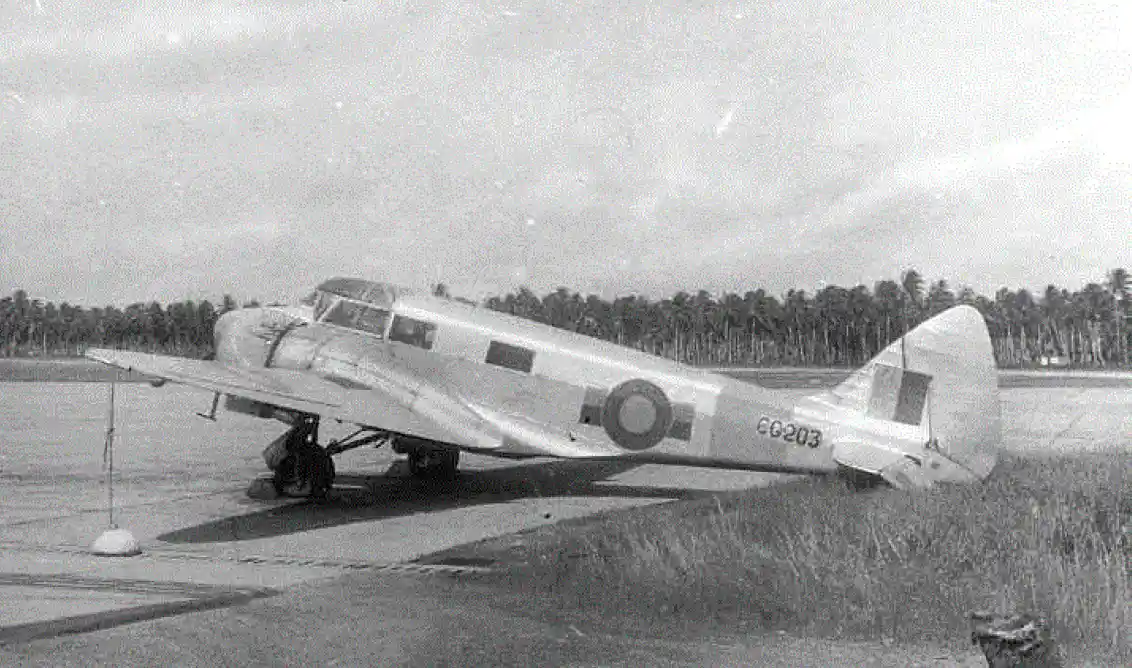
Air Vice Marshal Mendis relinquished command of the Sri Lanka Air Force, on 1st November 1976. During AVM Mendis' command the SLAF had grown in manpower from 1,400 to 3,100 personnel, an increase of over 150%, occasioned largely by the requirements to counter the insurgency of 1971. Air Commodore Harry Goonetileke became the fifth Commander of the Air Force on 1st November 1976. Air Vice Marshal Goonetileke's period of command saw the beginnings of some important reclamation work, i...
THE SIXTH COMMANDER
The Calm Before the Storm
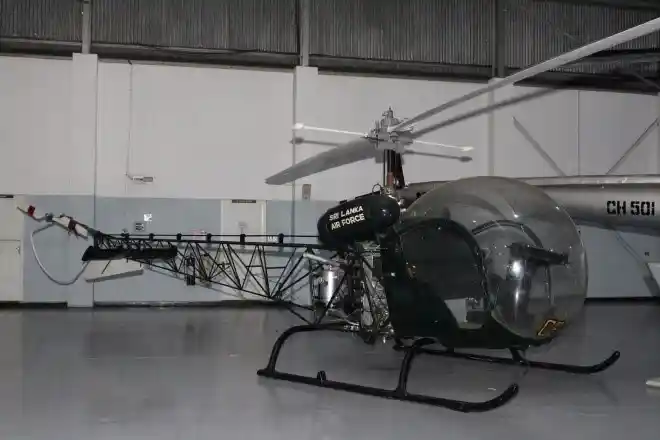
The early 1980's in the SLAF seemed no different to the era just gone by. Life went on with no turbulence yet this was in hindsight a largely deceptive scenario had appeared on the horizon and was moving slowly but inexorably to form the darkest hours. On 1st May 1981 Air Vice Marshal Dick Cuthbert Perera succeeded Air Vice Marshal Harry Goonetileke as Commander of the Air Force.AVM Perera continued where AVM Goonetilleke left off, in reclaiming disused airfields and runways, across...
DEVELOPMENT ADMIST GROWING WAR
The War Machine Awakens
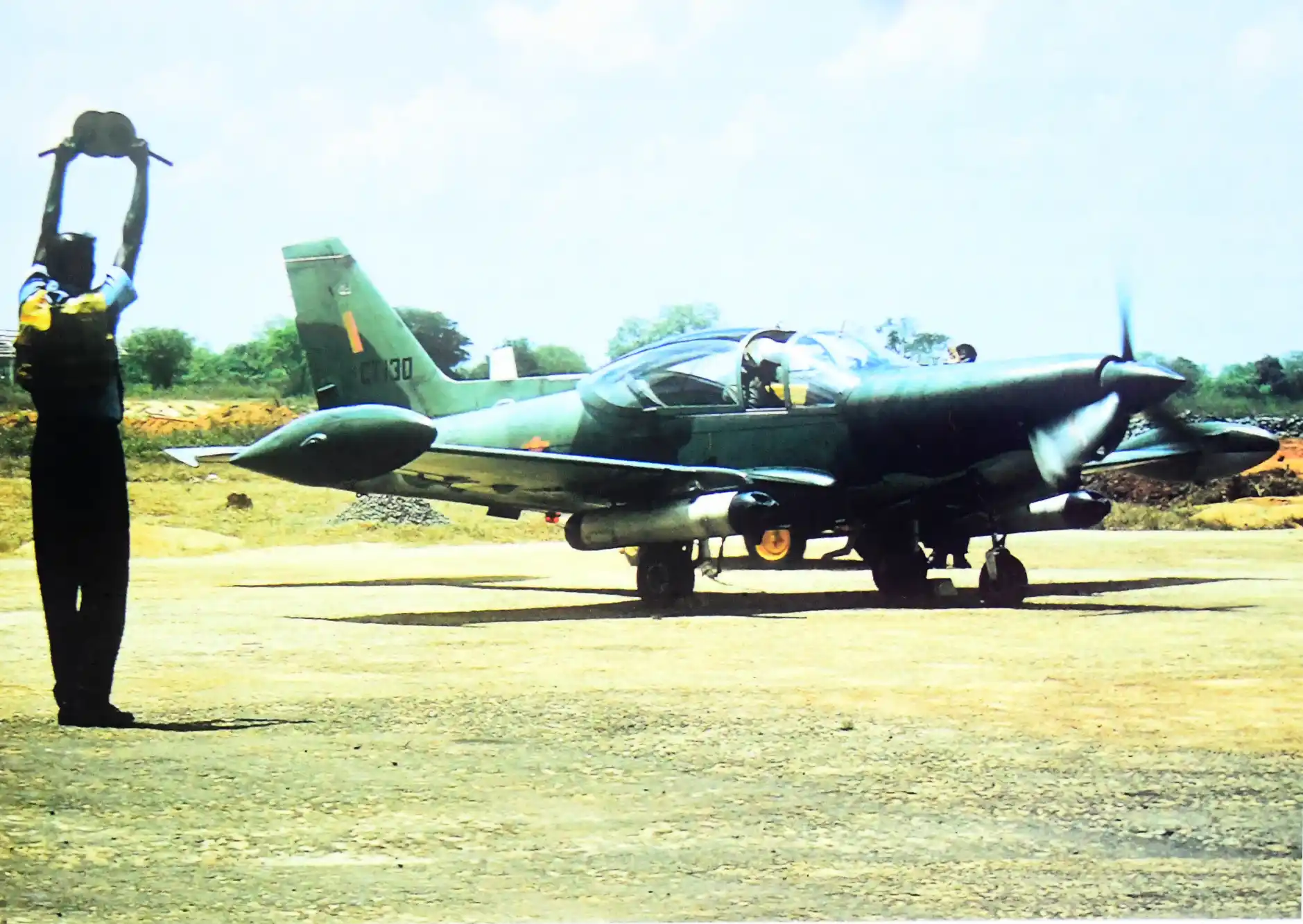
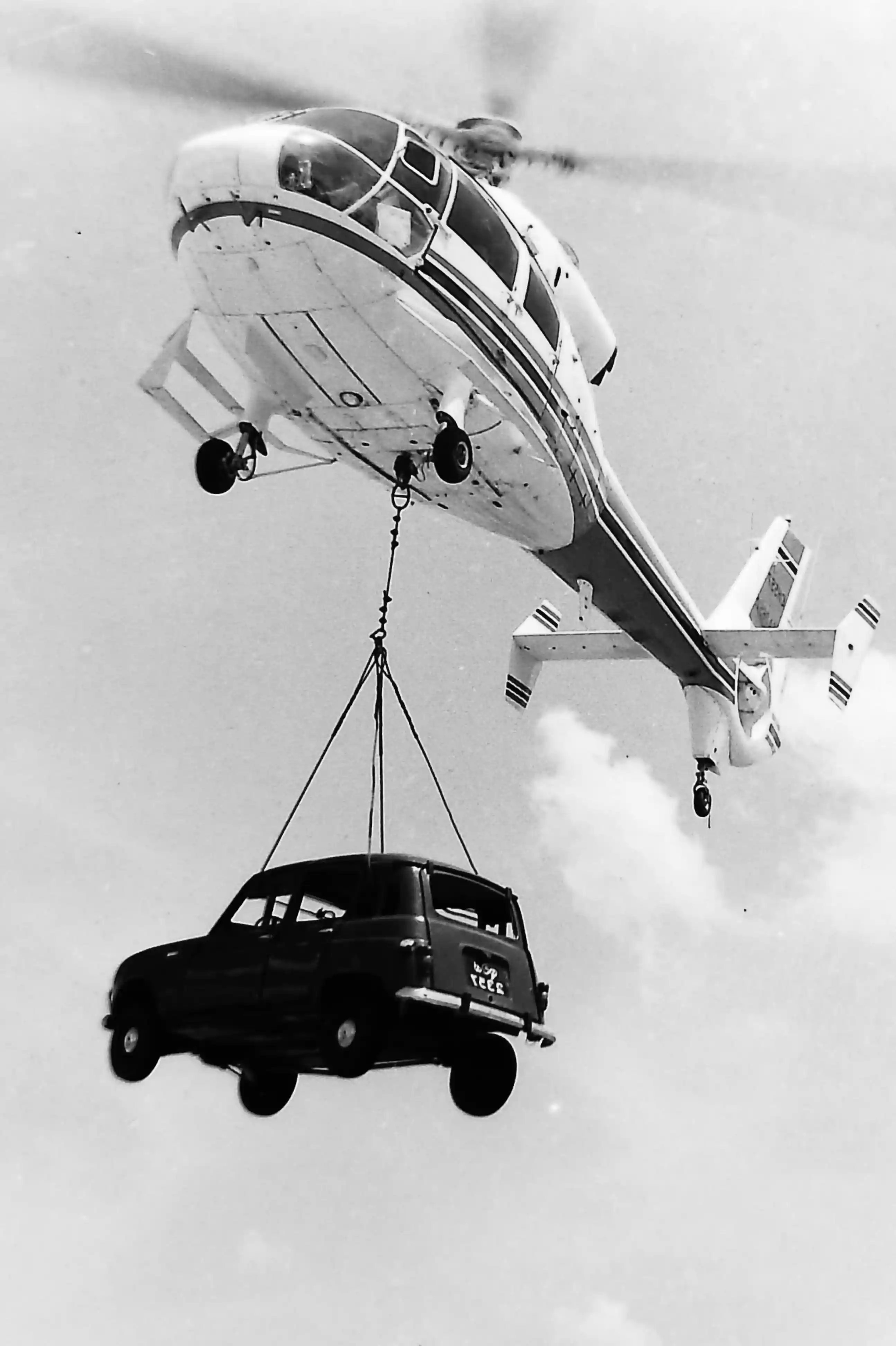
In 1983 the country faced a week of anarchy as a direct result of set backs faced by the Army in the Northern and Eastern parts of the country, at the hands of terrorists. However, history reveals the refleeting patterns of SLAF and how it was only in 1985 that 19 aircraft were added to the fleet with only a few ground attack units in this complement All this while, the Air Force stuck to its role of air support in the form of reconnaissance and transport services provided to the Ar...
DOCTRINE AND STRATEGY AND THE WAR INTENSIFIES
Doctrine & Strategy
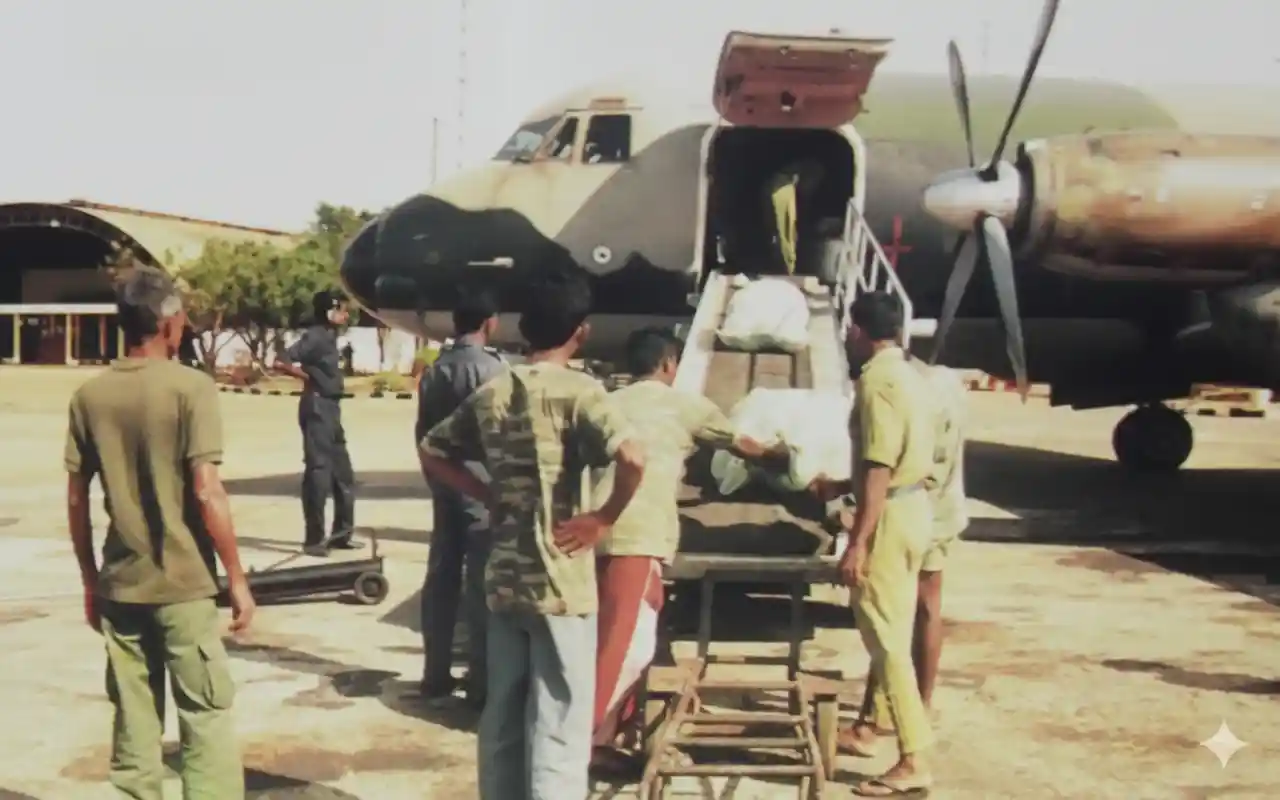
The formation of the Joint Operations Command (JOC) under the command of Lt Gen S. Cyril Ranatunge brought the Police and all Armed Services under a single command unit. To the Air Force, this meant that the co-ordination of operational use of its aircraft came increasingly under the purview of the JOC. With this unification of the forces, and its implications for the SLAF, given its earlier role of providing support to the ground effort, the SLAF command sat down to map out its own...
OPERATION LIBERATION
Operation Liberation — The Biggest Campaign Yet
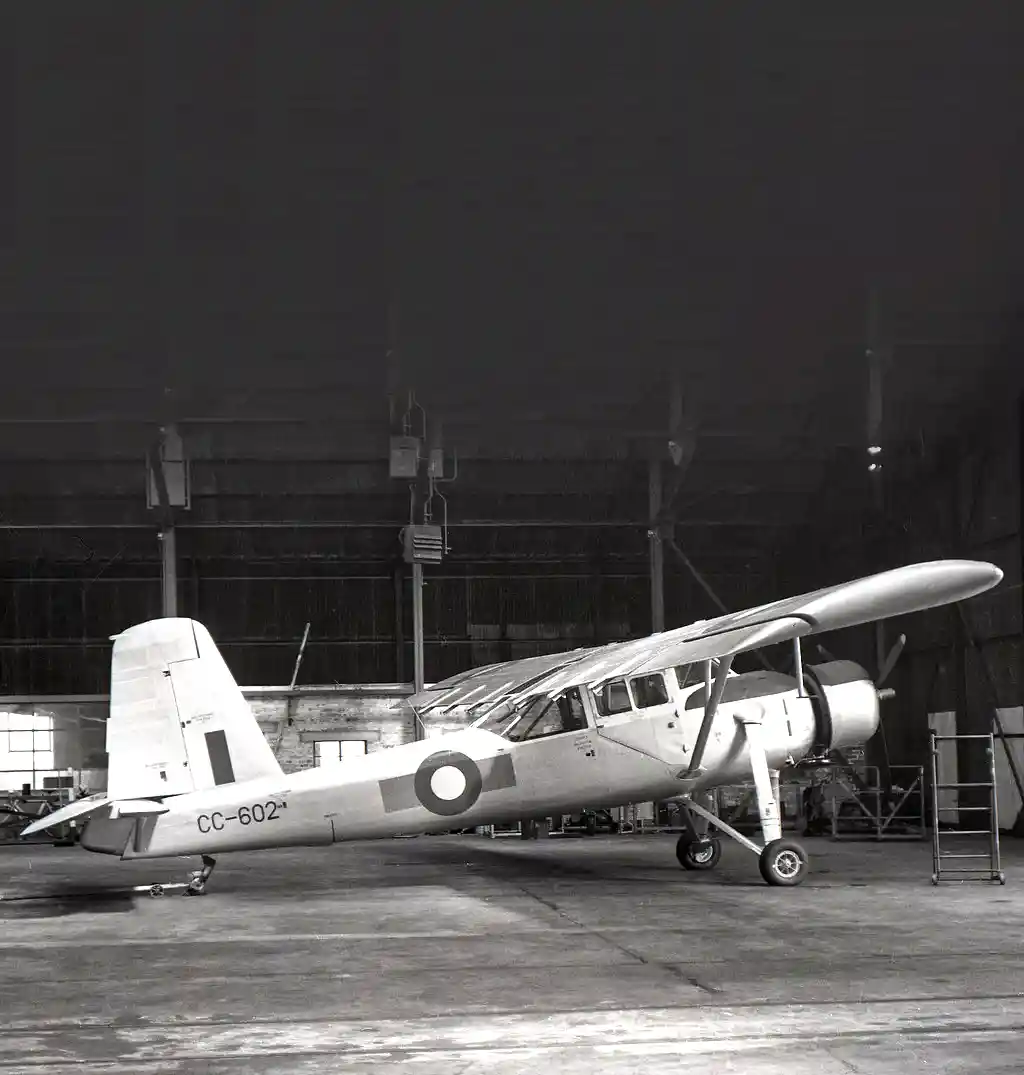
The war took a significant turn in May 1987. The JOC launched Operation Liberation or what came to be commonly called the Vadamarachi Operation . This was a clear and hold operation on an extremely large scale, conducted in the Vadamarachi area in the district of Jaffna. It was the biggest military operation undertaken by the Sri Lankan armed forces, up to that time. The sheer logistics and planning that went into this operation were unprecedented for all three armed forces. The Air...
THE ZONAL CONCEPT
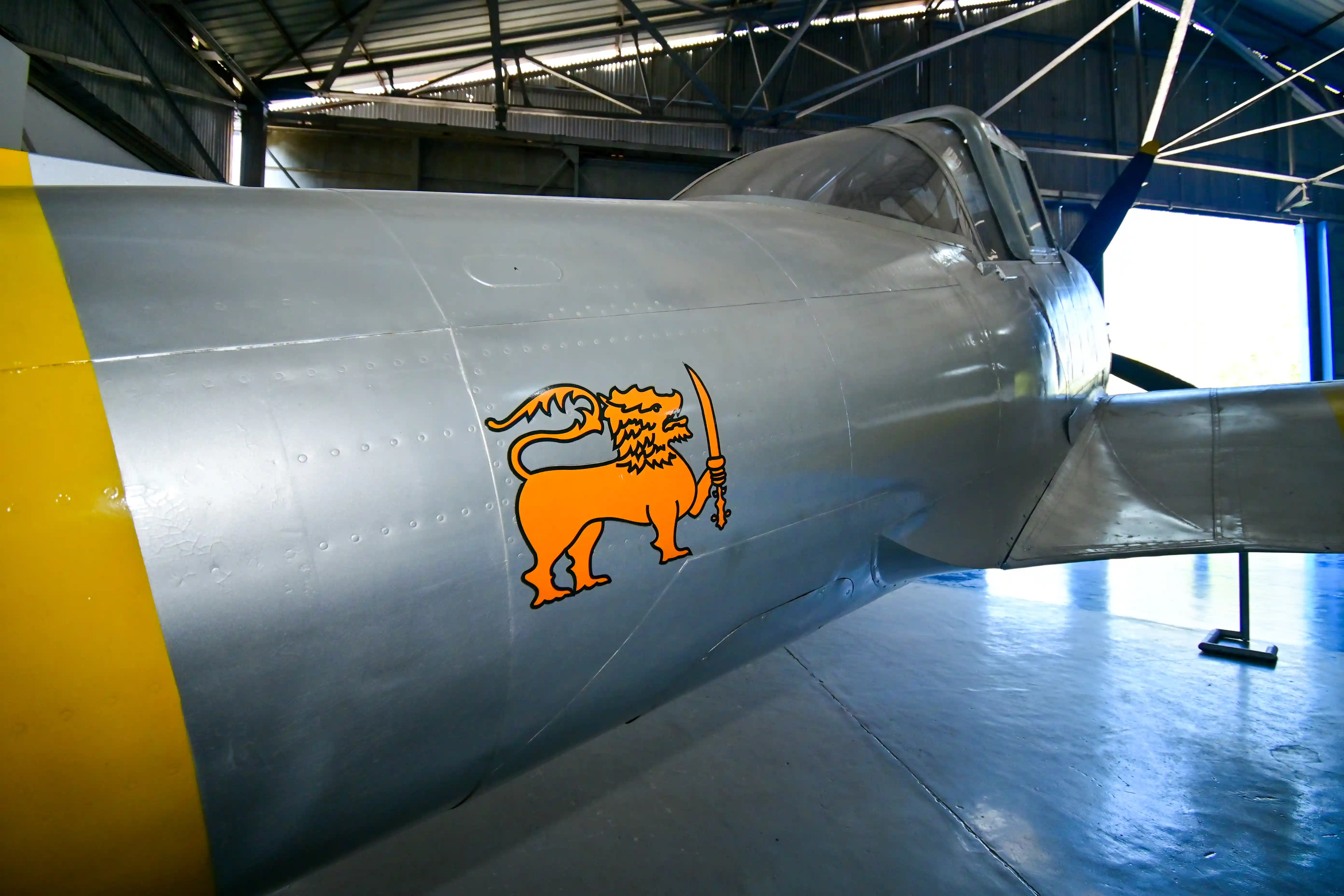
Zonal Command — A New Structure for War
when he introduced a Zonal Command system to help the Air Force respond to the intensifying operational requirements. The new concept was based on the grouping of SLAF stations according to their geographical locations, into Northern, Southern, Eastern and Western Zones. Under the new Zonal concept, the four Zonal Commanders were responsible for both air and ground operations that had been decided upon, by the Directorate of Operations at Air Force HQ. In the chain of command, the Z...
THE ROAR OF JETS ONCE AGAIN
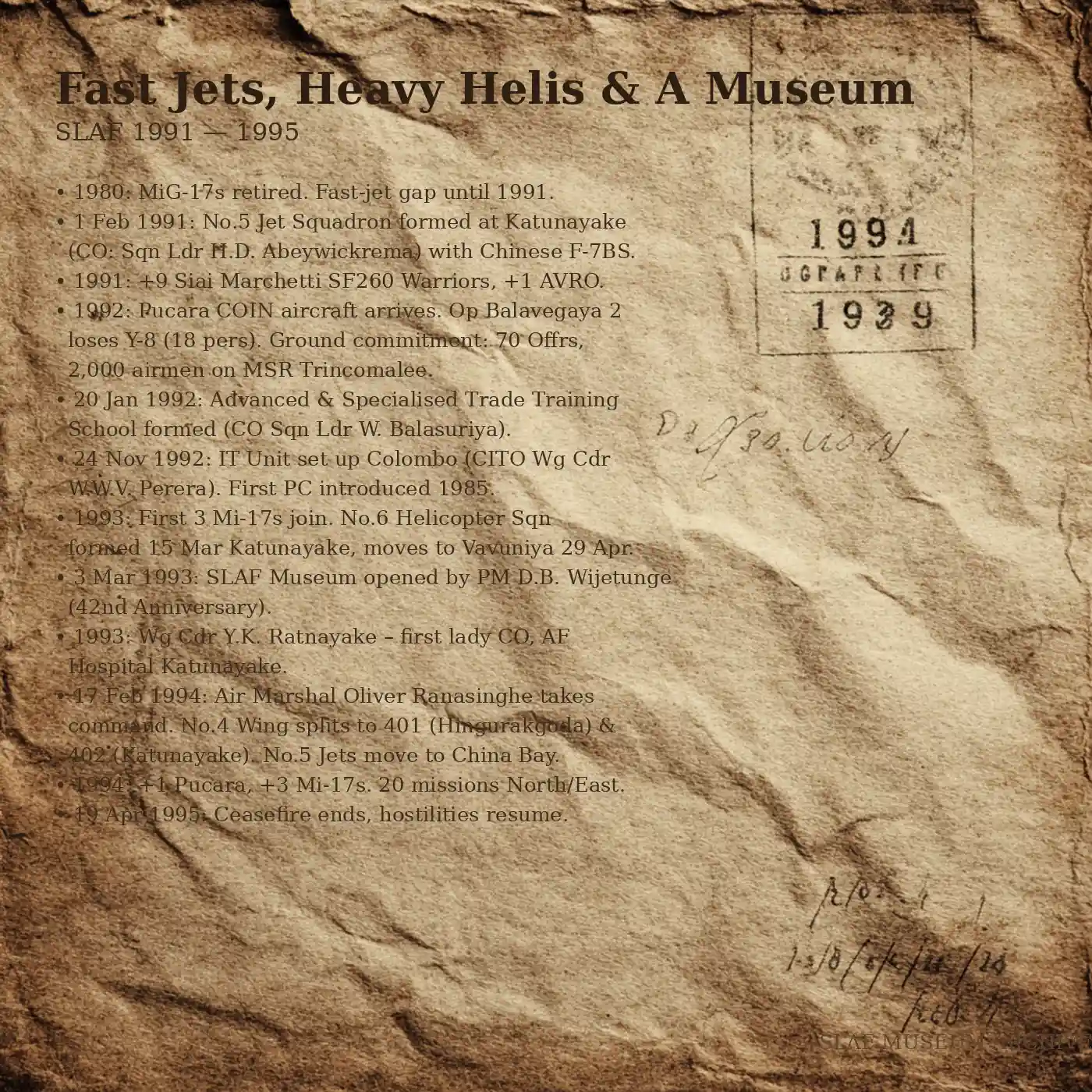
Fast Jets, Heavy Helis & A Museum
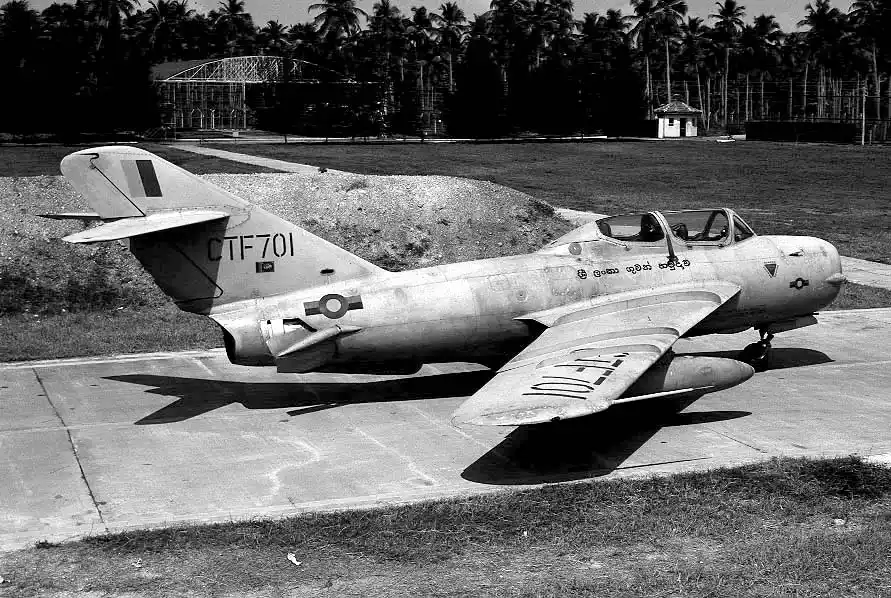
The skies over Sri Lanka last reverberated to the roar of fast jet aircraft way back in the 1980's. Then it was the MIG 17 jets that represented the fast jet capabilities of the SLAF. Once the MIG's were decommissioned in 1980, no more jets were inducted to the fleet for quite some time. In 1991 the SLAF began fast jet operations again, with the acquisition of Chinese F7 jets in the fighter/ground attack category. The F series jets were Chinese produced derivatives of the Russian MIGs from the M...
THE ROAR OF JETS ONCE AGAIN
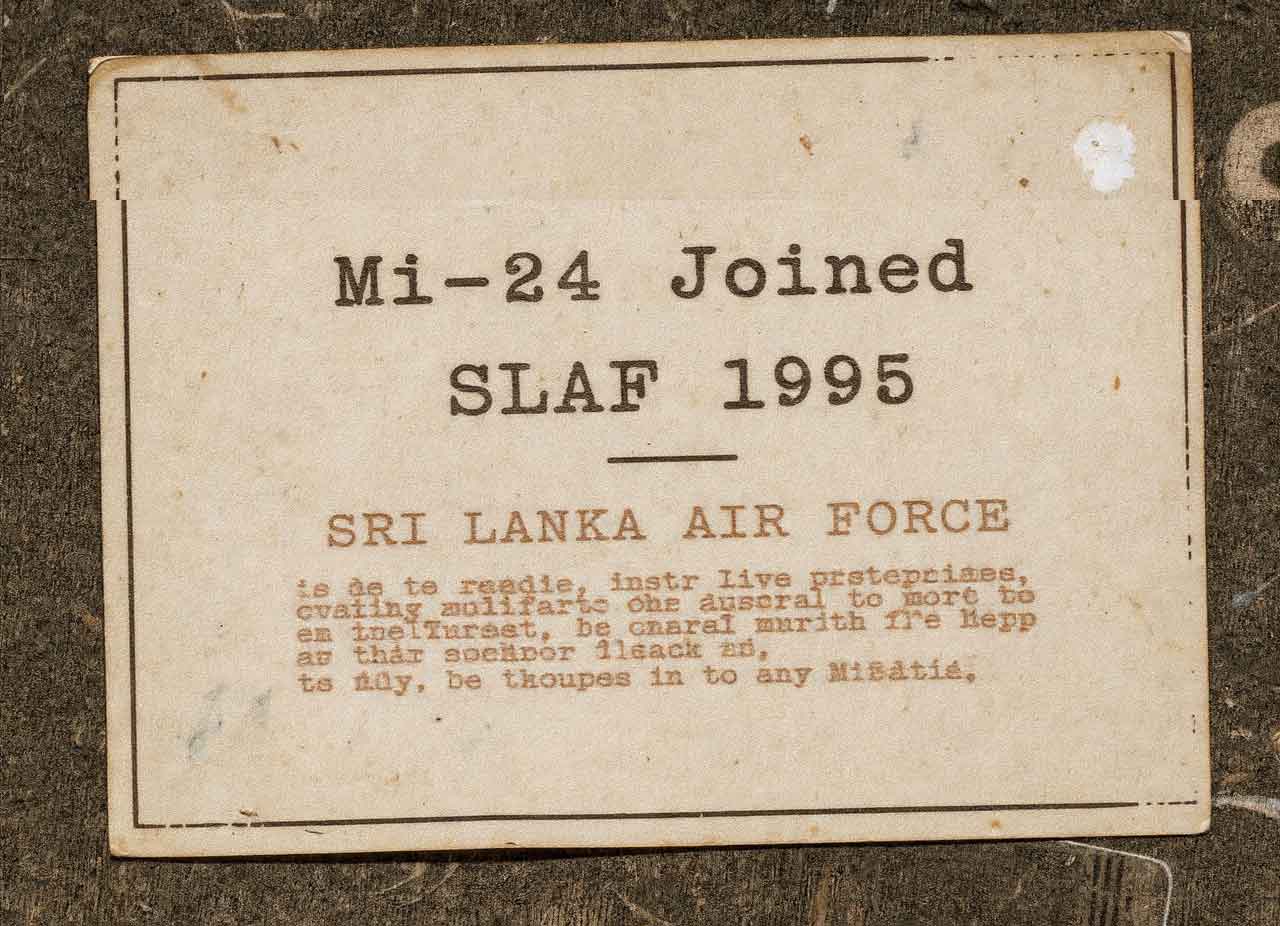
The Mi-24 Arrives — The Beast Joins the Fight
MI-24 Joined SLAF The escalation of hostilities prompted further aircraft acquisitions six more Mi-17 tactical helicopters were purchased. For the first time, an attack helicopter in the form of the Mi-24 joined the SLAF fleet three of these aircraft were leased until delivery of those purchased by SLAF. The Mi-24s were temporarily attached to No. 401 Squadron at Hingurakgoda (later No. 7 Helicopter Squadron). At the same time, three Antonov AN-32B transport aircraft joi...
DAWN OF A NEW ERA
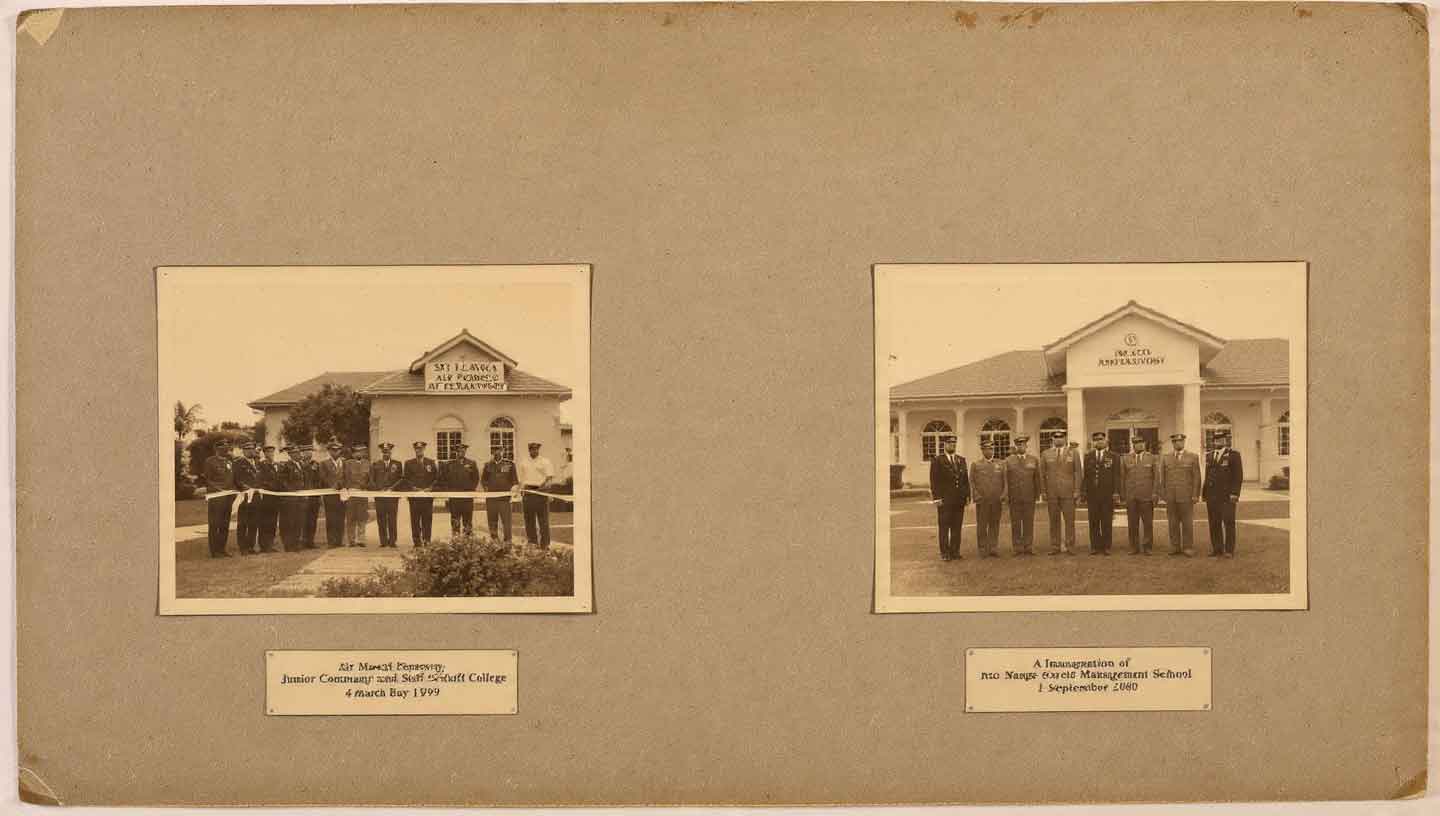
From Crisis to C-130s
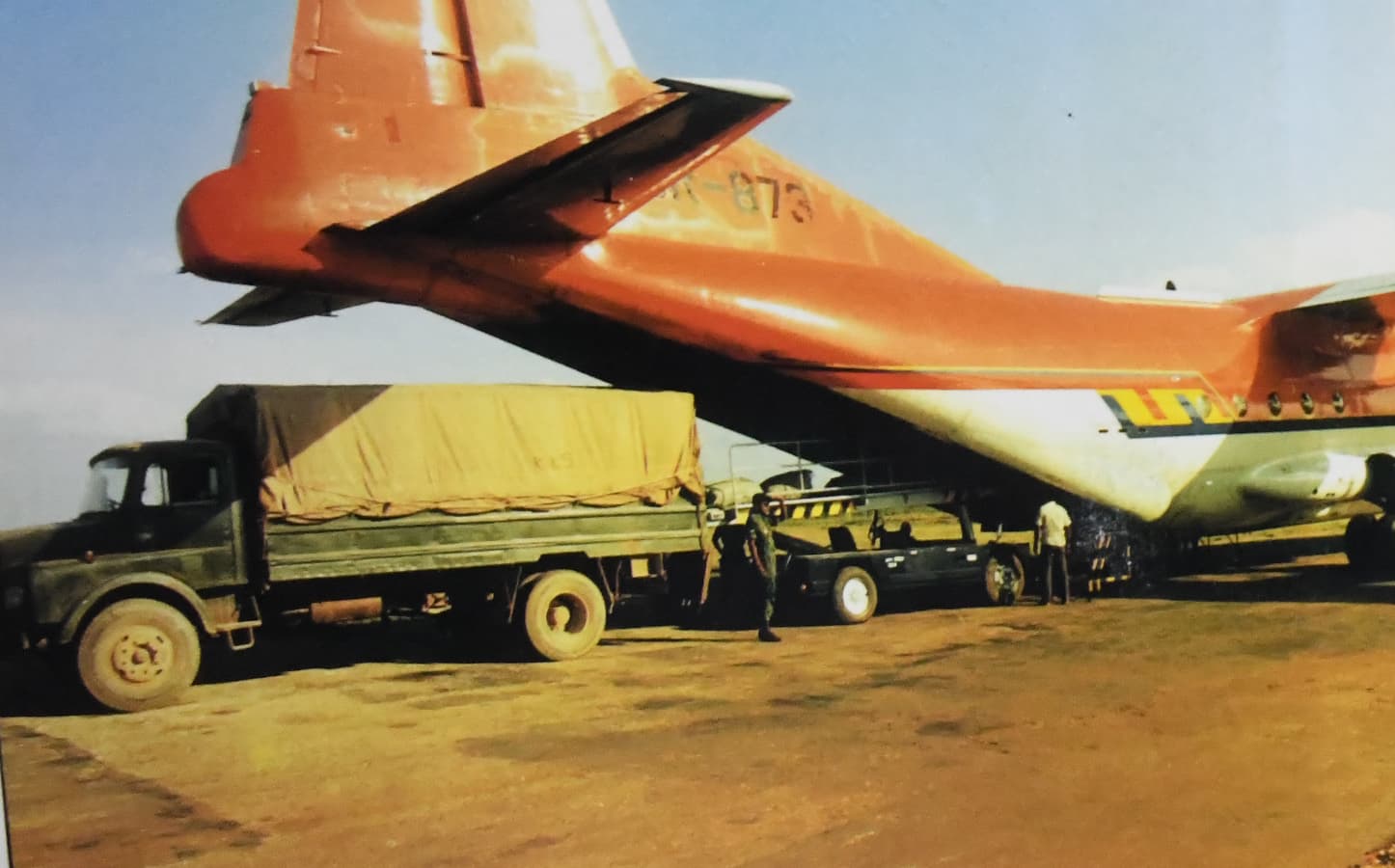
Air Marshal Oliver Ranasinghe, the ninth Commander of the SLAF, relinquished Command in March 1998. Air Marshal Jayalath Weerakkody took over duties as the tenth Commander of the Sri Lanka Air Force on 6th March 1998. He was instrumental in re-organizing the SLAF's Flying Formations into effective squadrons, to meet the needs of a growing role and an expanding fleet. Even today, aircraft are inducted to meet a need, and new squadrons form around the aircraft and the designated roles...
THE DAWN OF A NEW MILLENNIUM
Unceasing Waves — The Turning Point
The year 2000 dawned on a violent note for the Air Force. The major offensives were conducted against the Security Forces in Jaffna, by the Northern rebels in a bid to wrest territory held by the Army. These efforts were initially successful as they drove the forces back, reclaiming significant tracts of territory as they went. Their weaponry of artillery, mortar and missiles was intensively deployed in one of their largest operations in recent times, code named Unceasing Waves . The Sri Lanka ...